
Final Presentation available for NAVISP EL1-089 "Modelling Quantum Sensors in a realistic navigation system context"
Last Updated: Created at:
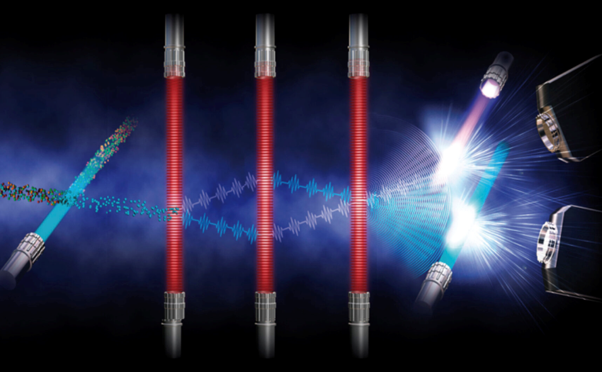
On the 11th of November 2026 GMV NSL and University of Birmingham presented the results of NAVISP‑EL1-089, which investigated – through simulations and modelling – how the use of quantum sensors can benefit PNT systems.
Their approach combined cold-atom interferometer measurements with classical inertial measurement units (IMUs) to estimate and correct the classical sensors’ biases. The team compared this hybrid approach with conventional navigation solutions in realistic rail, aircraft and maritime simulations, which included a GNSS outage.
The main finding, with the choices done by the team, is that quantum sensing provides the greatest navigation benefit with low platform dynamics and high-quality IMUs, while GNSS-based bias estimation generally performs better with higher dynamics and lower-grade sensors.
The activity was fully funded by ESA NAVISP Element 1, whose objective is to innovate PNT technologies, products and services. The slides can be accessed here.