Filter By

132: Development and Validation of Flexible eLoran/GNSS signal simulator
Global dependence on GNSS for PNT has exposed threats from jamming, spoofing, interference, and space‑weather effects. These threats are now widely recognised by defence, maritime, aviation, and critical infrastructure stakeholders as a systemic risk to safety and national resilience. In response, eLoran has re-emerged internationally as a terrestrial, high‑power, low‑frequency complementary PNT…

131: Chip Scale Optical Atomic Clock for PNT applications
As for ground‑based high‑performance clocks, the exploitation of atomic optical transitions represents a promising approach to improving the accuracy and stability of very compact atomic clocks, down to 10 ns per day, with short‑ to medium‑term stability ten times better (or more) than existing products. While the main bottleneck of this technology lies in the availability of compact Photonics…

130: Robust GNSS Tracker for Sensitive Applications
The International Atomic Energy Agency (IAEA) safeguards system is designed to verify States’ legal undertakings to use nuclear material for exclusively peaceful purposes. States declare their nuclear material and activities to the IAEA, and the IAEA verifies the correctness and completeness of these declarations. This requires robust and resilient GNSS trackers which can withstand sophisticated…
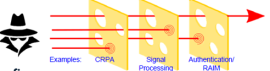
120 - Resilient PNT Critical National Infrastructure validation test bench
Satellite navigation has widespread usage and very satisfactory performance for most of the professional and consumer applications. However, for certain uses, there is increasing awareness of satellite navigation weaknesses and limitations. In his keynote address at the IEEE/ION PLANS 2025 the “Father of GPS” Dr. Brad Parkinson, who proposed the “Protect, Toughen, Augment” (PTA) framework for PNT…
- ‹ prev
- 1
- next ›