
PERENA: Real Time PPP Service Demonstrator for Geomatics Applications
Last Updated: 03/07/2023 07:30 Created at: 03/07/2023 05:59
Final Presentation of NAVISP Project EL2 116 now available:
On Tuesday, May 30th, 2023, GMV Innovating Solutions S.R.L. and SysCAD Solutions SRL presented the results of the NAVISP EL2 116 project "Perena: Real Time PPP Service Demonstrator For Geomatics Applications". Over 30 people from industry and research institutes followed the interesting presentation and the subsequent interactive Q&A session.
The integration of Precise Point Positioning with Real-Time Kinematic (PPP-RTK) techniques in the geomatics domain is still in its early stages of adoption, with RTK remaining the primary approach. However, there is a growing need to seamlessly incorporate PPP-RTK into geomatics applications, requiring the adaptation of the positioning stream to accommodate different reference systems, national standards, and regional requirements. While RTK will continue to be the main positioning method, PPP-RTK offers valuable advantages in areas with limited network coverage and serves as an additional layer of robustness against station failures or maintenance activities. The goal of the project was to provide users with both current and new services through a single provider, enabling a smooth transition between RTK and PPP-RTK solutions in various environments.
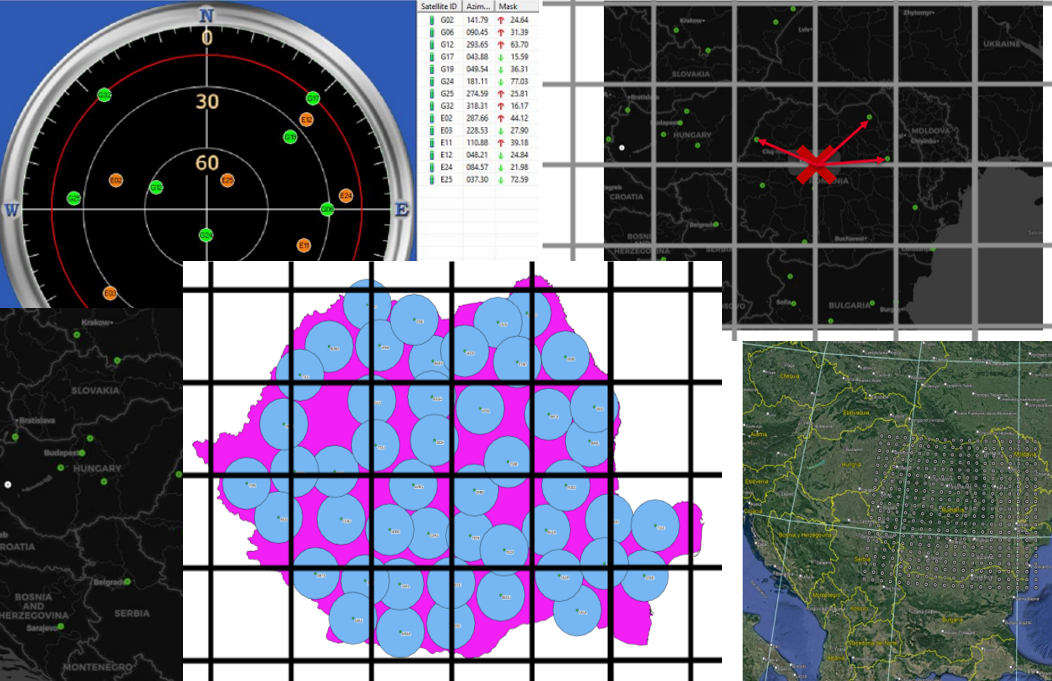
The PERENA project had the objective of enhancing the availability of high accuracy positioning in geomatics applications through the development of a backend component that effectively adapts the Precise Point Positioning (PPP) stream. This integration successfully combined the precise positions and clocks of GNSS satellites, enabling centimetre-level accuracy on a global scale while requiring fewer reference stations compared to traditional methods. By incorporating PPP with existing Real-Time Kinematic (RTK) service providers, the range of positioning services available to users expanded significantly. The project achieved this by ingesting and redistributing the PPP-RTK stream through the existing infrastructure, ensuring that users have alternative solutions even in situations where the local RTK service is unavailable. Seamlessly integrating the service was a key focus, allowing users to easily switch between available services without disruption. To facilitate this, a reference conversion module was developed to adapt the existing PPP stream specifically for GNSS-based service providers. The architecture involved a network of GNSS Sensor Stations, which included a global network for continuous satellite monitoring worldwide and regional networks for enhanced monitoring density in specific areas.
In conclusion, the PERENA project has successfully developed and integrated the Virtual Reference Station Server (VRS Server), with validated functionalities and extensive experimentation. The configuration of the VRS Server, including the optimal distances between stations, has been identified as a key factor. The achieved results meet the proposed requirements and offer a diverse range of use cases covered by the VRS service. This project brings significant commercial benefits, such as reduced usage of Continuously Operating Reference Stations (CORS), cost-efficient maintenance, improved services in border areas, and the potential for expansion into new regions. Looking towards future work, it is recommended to conduct further tests with different configurations to profile the performance of the Real-Time Kinematic (RTK) using the VRS-generated Virtual Reference Stations. These future steps will undoubtedly advance the capabilities and applicability of the VRS Server, ushering in new possibilities for geomatics applications.
The project was part of NAVISP Element 2, which aims to maintain and improve the capabilities and competitiveness of the participating States' industry in the global market for satellite navigation and, more broadly, PNT technologies and services.
More detailed information can be found in the slides of the Final Presentation.