
Filter By
134: All-weather Laser Timing and Ranging Links for Optical PNT Systems
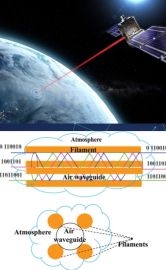
Optical laser communication links from satellite to ground are affected by atmospheric conditions. When penetrating through clouds, optical signals suffer from power degradation up to complete loss of the satellite-to-ground link. As a result, optical ground stations (OGS) as used in the OpSTAR activity are not able to establish optical links continuously but will instead have data gaps. The…

133: Resilient PNT by a combined GNSS/eLoran/INS approach for U-space applications
EC Regulation 2021/664 defines a minimum set of requirements for the Unmanned Aircraft Systems (UAS) operations in certain geographical zones, which is called U-space. U-space defines new services relying on a high level of digitalisation and automation, designed to provide access to airspace for large numbers of unmanned aircraft. Emerging U‑space Beyond Visual Line of Sight (BVLOS) operations,…

132: Development and Validation of Flexible eLoran/GNSS signal simulator
Global dependence on GNSS for PNT has exposed threats from jamming, spoofing, interference, and space‑weather effects. These threats are now widely recognised by defence, maritime, aviation, and critical infrastructure stakeholders as a systemic risk to safety and national resilience. In response, eLoran has re-emerged internationally as a terrestrial, high‑power, low‑frequency complementary…

125 - Receiver Architectures and Beam Scheduling Strategies for Fused- PNT Concept
The current and future LEO satcom constellations operating in Ku and Ka bands are considering, along with the provision of the main communication services, also a native provision of positioning, navigation, and timing (PNT) services. Leveraging the existing satcom frequency bands and signals, the concept of such integration is referred to as Fused PNT, promising increased resilience and…

119 - Dual Polarization Arrays for compact resilient GNSS Receivers
The ability of exploiting the spatial dimensions has made array antennas valuable for many applications, e.g., multipath and interference mitigation, spatial diversity, and localization. Consequently, over the past years, array antennas, i.e. Controlled Receptions Pattern Antennas (CRPA), have been deployed with GNSS receivers either to provide a spatial filter (null steering techniques) or to…

118 - On demand PNT services during crisis
The success of satellite-enabled PNT applications is accompanied by a growing dependency of our society and economy on the availability of GNSS, which has motivated R&D, demonstration as well as deployment of so-called Alternative PNT systems (APNT). This dependency extends to GNSS augmentation systems and PNT capabilities relying on local terrestrial infrastructures which can be exposed to…

117 - Resilience Techniques and Algorithms for GNSS Space Receivers in Interference, Jamming and Spoofing Conditions
The threats of ground-based interference, jamming, and spoofing impacting terrestrial and aviation receivers are well recognised by the navigation community, driving many system- level and user-level mitigation studies and technology developments. However, sufficient attention has not yet been given to the impact and mitigation of these threats on GNSS space receivers in LEO (commercial and…
- ‹ prev
- 1
- next ›