
Filter By

124 - Optimisation of PVT engines for LEO measurement diversity
LEO-PNT stands out among the very promising evolutions of spaceborne PNT systems towards Multi-Layer Satellite Systems (MLSS), leveraging differentiators such as:
Whitening of measurements, in particular multipath;
More diverse opportunities to exploit doppler measurements in addition to ranging;
Faster transition between LOS and NLOS status, beneficial to the awareness of the…
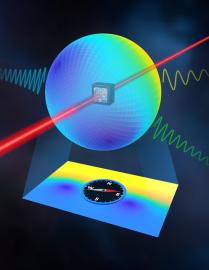
123 - Quantum Magnetometer and algorithms for integrated Map Matching and Map Building
Magnetic crustal anomaly navigation is an alternative PNT technique which leverages the fact that the Earth’s crustal magnetic field exhibits spatial variations that can serve as a unique “fingerprint” for positioning. With sufficient sensitivity, these anomalies can be measured and matched to reference maps, enabling navigation in environments where other signals are unavailable or…
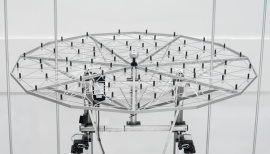
122 - Acoustic arrays for Drones localization and identification
Drones, or Unmanned Aerial Vehicles (UAVs), have evolved from defence applications into versatile platforms used across industries. They can fly autonomously or via remote control and are equipped with sensors and payloads for tasks such as crop monitoring, infrastructure inspection, environmental surveillance, logistics, and emergency response. As drone technology advances, features like AI,…
121 - Resilient PNT based on Lasers
GNSS-based systems are increasingly exposed to interference, RF jamming and spoofing. This is an unacceptable risk for safety‐critical operations. A laser-based positioning system can mitigate these threats through the inherent resilience and directionality of optical links. Narrow beams allow for selective PNT services and make interception or false-signal injection difficult. This results in a…
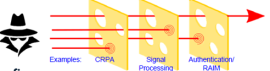
120 - Resilient PNT Critical National Infrastructure validation test bench
Satellite navigation has widespread usage and very satisfactory performance for most of the professional and consumer applications. However, for certain uses, there is increasing awareness of satellite navigation weaknesses and limitations.
In his keynote address at the IEEE/ION PLANS 2025 the “Father of GPS” Dr. Brad Parkinson, who proposed the “Protect, Toughen, Augment” (PTA) framework…
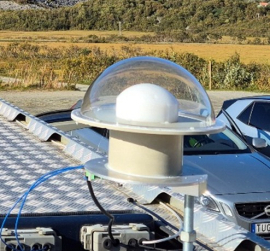
119 - Dual Polarization Arrays for compact resilient GNSS Receivers
The ability of exploiting the spatial dimensions has made array antennas valuable for many applications, e.g., multipath and interference mitigation, spatial diversity, and localization. Consequently, over the past years, array antennas, i.e. Controlled Receptions Pattern Antennas (CRPA), have been deployed with GNSS receivers either to provide a spatial filter (null steering techniques) or to…
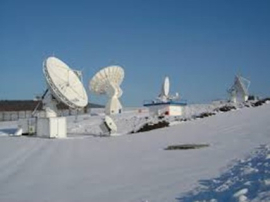
118 - On demand PNT services during crisis
The success of satellite-enabled PNT applications is accompanied by a growing dependency of our society and economy on the availability of GNSS, which has motivated R&D, demonstration as well as deployment of so-called Alternative PNT systems (APNT).
This dependency extends to GNSS augmentation systems and PNT capabilities relying on local terrestrial infrastructures which can be exposed to…

117 - Resilience Techniques and Algorithms for GNSS Space Receivers in Interference, Jamming and Spoofing Conditions
The threats of ground-based interference, jamming, and spoofing impacting terrestrial and aviation receivers are well recognised by the navigation community, driving many system- level and user-level mitigation studies and technology developments. However, sufficient attention has not yet been given to the impact and mitigation of these threats on GNSS space receivers in LEO (commercial and…
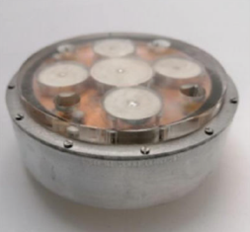
116 - Design of CRPAs for aviation and high-accuracy services
Jamming and spoofing of GNSS are a major concern. A controlled reception pattern antenna (CRPA) is one of the most powerful technologies to mitigate jamming and spoofing. As a result, it is attractive to start using CRPAs for several applications, including aviation and high-accuracy services. However, the use of a specific CRPA for specific applications requires a detailed evaluation of the…