Filter By
Element 2 - Competitiveness in PNT
-
Start date: 14/11/2026Duration: 9 MonthsThe project aimed to qualify HAUT-S as a satellite subsystem for autonomous onboard Precise Orbit Determination (POD) and Time Synchronization (TS) in low Earth orbit. Integrated as a self contained navigation payload, HAUT-S processed dual-frequency GPS and Galileo pseudorange and carrier-phase observations together with Galileo High Accuracy Service corrections. Its navigation processor combined…
Subcontractors

Name: DLR - Institute of Communications and Navigation
Country: Germany
Website: https://www.dlr.de/kn/en/
-
The project proposes the development of a hybrid, machine-vision-supported navigation system for UAVs that ensures safe and precise operation in GNSS-jamming and spoofing environments, with an initial focus on large-scale solar park inspection and linear infrastructure surveying. Building on PX4/ArduPilot and QGroundControl, the system fuses GNSS, inertial sensors and computer vision…
Subcontractors

-
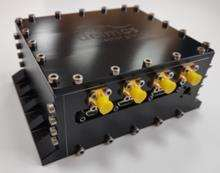 The project is a direct continuation of NAVISP-EL2-175 LEO PNT ODTS. The objective is to develop the main on-board navigation unit for the LEO-PNT satellites. The high-precision on-board GNSS receivers provide POD in real-time, using a disciplined oscillator aligning the satellite time to Galileo System Time. It also analyses the user segment, characterizing the performance of the LEO PNT in the…
Subcontractors

-
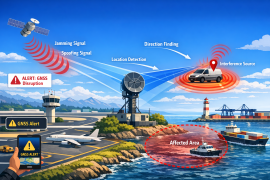 Start date: 03/11/2026Duration: 12 MonthsThe SJAWS aims to design and build a system for detecting GNSS jamming and spoofing, with the ability to alert its GNSS users in the affected area, such as airports or harbours when the service becomes operational. Moreover, it will be also able to detect the direction of arrival of the interference and its location.
Subcontractors
-
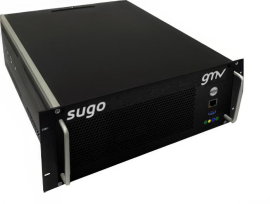 The objective of this project is to develop a SBAS Signal Generator designed for deployment in SBAS uplink stations. The outcome will be a prototype, demonstrated in a relevant operational environment (TRL6).
 -
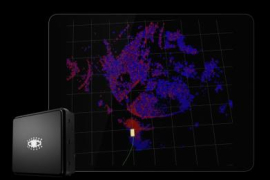 The proposed project aims to develop an odometry and localization system leveraging Sensrad’s imaging radar technology – Hugin D1. By exploiting the rich spatial and Doppler information inherent in Sensrad’s imaging radar, the system will provide highly accurate positioning with increased redundancy, particularly in challenging environments where GNSS signals are unreliable or unavailable.…
 -
 Start date: 22/07/2026Duration: 18 MonthsGIASONE -2 he development of an enhanced GNSS monitoring infrastructure to provide GNSS users with the tools to safeguard its operational status, starting from the prototype developed in GIASONE project. The proposed solution would be an enabling system to open the way towards safer and more pervasive usage of GNSS also in those fields where, nowadays, it is not of primary interest, such as…
Subcontractors

-
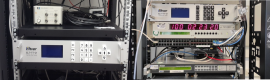 Start date: 17/07/2026Duration: 12 MonthsUnder an ESA NAVISP co-funded project, a new fully digital TW modem interoperable with the legacy one was developed by Eltvor (CZ), two prototypes were manufactured, and a preliminary test campaign has confirmed the targeted performance. The objectives of the proposed Experimentation Plan are to extend the verification and validation of the newly developed fully digital modem, including long-term…
 -
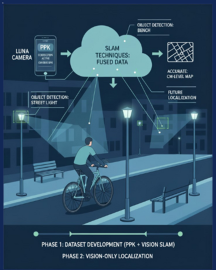 The Luna Systems OCULIZE project aims to improve micro-mobility safety through the development of a dedicated AI-enabled camera platform for cyclists, capable of providing real-time proximity alerts and generating high-precision urban safety maps. The solution will enable the creation of geo-referenced 3D digital safety twins of cycling infrastructure by combining on-street image capture, machine…
 -
Start date: 01/06/2026Duration: 12 MonthsThe activity develops and validates an AI-enhanced GNSS integrity monitoring layer for safety-critical positioning applications. The solution combines high-accuracy GNSS correction services, RTK positioning, protection-level estimation and machine-learning based anomaly detection to assess whether a position solution can be trusted in real time. By monitoring correction quality, receiver…