

United Kingdom
-
 Start date: 09/10/2024Duration: 27 MonthsODYSSEY (Orbits-as-a-Service for Satellite Signals of Opportunity) is funded through Element 2 of the ESA NAVISP programme and is being carried out by GMV-UK. It will develop a precise orbit determination centre for communications satellite constellations. This will be used to provide a new commercial service generating precise orbits for different satellite constellations whose signals can be…
 -
 Start date: 29/09/2024Duration: 18 MonthsThe main purpose of this activity is to evaluate – through simulations and modelling – how the use of quantum sensors can benefit PNT systems. To meet this overall purpose, the following study objectives can be derived: Design and develop sensor models that can provide representative measurements for quantum sensors, Integrate those sensor models within a simulation environment that will enable…
Subcontractors

-
 Start date: 01/08/2024Duration: 18 MonthsXona Space Systems UK, QinetiQ, and Xona Space Systems Canada are undertaking a collaborative project to develop hardware-in-the-loop testbeds of the PULSAR PNT service. These will help to develop user equipment and to showcase the improvements the service will provide to various use cases for Automotive and Critical National Infrastructure (CNI) through enhanced positioning performance and…
Prime contractor

Subcontractors


-
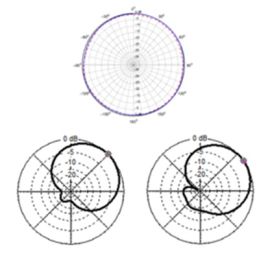 Start date: 16/07/2024Duration: 13 MonthsTechnology re-fresh of an existing 4-channel RDF receiver to add beamforming and null steering to mitigate the effects of increasing manmade background noise and interference. Remote access will be provided for firmware update and for remote monitoring, and for multi-receiver triangulation. The engineering needs to be designed to accommodate antenna compromises including high local interference…
Subcontractors

-
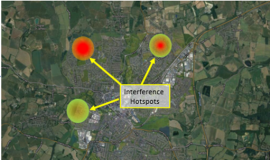 Start date: 16/07/2024Duration: 18 MonthsDevelopment of a broadband RDF receiver and antenna system for noise and interference mapping covering the HF to UHF bands so including GNSS bands. Each receiver will include edge computing for signature analysis and compression and will be networked to a central location for heat mapping of the noise and interference sources taking inputs form large numbers of receivers. The engineering is…
Subcontractors
-
 Xairos UK Limited, Inmarsat, and Heriot-Watt University will advance the development of satellite-based Quantum Time Transfer (QTT). This project will advance the development of QTT, a new secure optical two-way time transfer technology capable of highly secure picosecond level precision between ground-based clocks and clocks onboard satellites. QTT utilises individual photon pairs entangled in…
Subcontractors


-
 The main objective of this project is to develop and implement a combined eLoran and GNSS receiver, and demonstrate in a number of realistic scenarios that these can be combined to provide a more robust and reliable navigation solution. The project will be 15-18 months in duration, and will involve technology and concept research, design of the software and hardware, build, testing and an official…
 -
 Start date: 10/06/2024Duration: 6 MonthsThe UPDATE project will serve to define requirements, architecture and a development plan for a Minimum Viable Product (MVP) of a UK National PNT Digital Twin Environment (DTE). The MVP will meet the immediate needs of the UK Government with respect to delivery of its Policy Framework for Greater PNT Resilience (10-point plan). It will provide data in support of the development of business cases…
 -
 Start date: 30/05/2024Duration: 18 MonthsThe “Maritime Autonomous Navigation using Alternative Absolute positioning techniques” (MANAA) project will provide new ways of integrating millennia old celestial navigation techniques with state-of-the-art technology and thinking, whilst developing visual and non-visual spectrum optical techniques and sensors with the potential to observe celestial bodies independently of the lighting and…
Prime contractor

Subcontractors


-
 Start date: 03/04/2024Duration: 24 MonthsThe traditional mathematical approach to deriving Position Navigation and Timing (PNT) data from Global Navigation Satellite Systems (GNSS) does make some assumptions about the data being received. Machine Learning (ML) techniques could be used to instead of these traditional techniques to integrate GNSS signals and Signals of Opportunity (SOOP) signals in a way that doesn’t make these assumptions…
Prime contractor
Subcontractors